
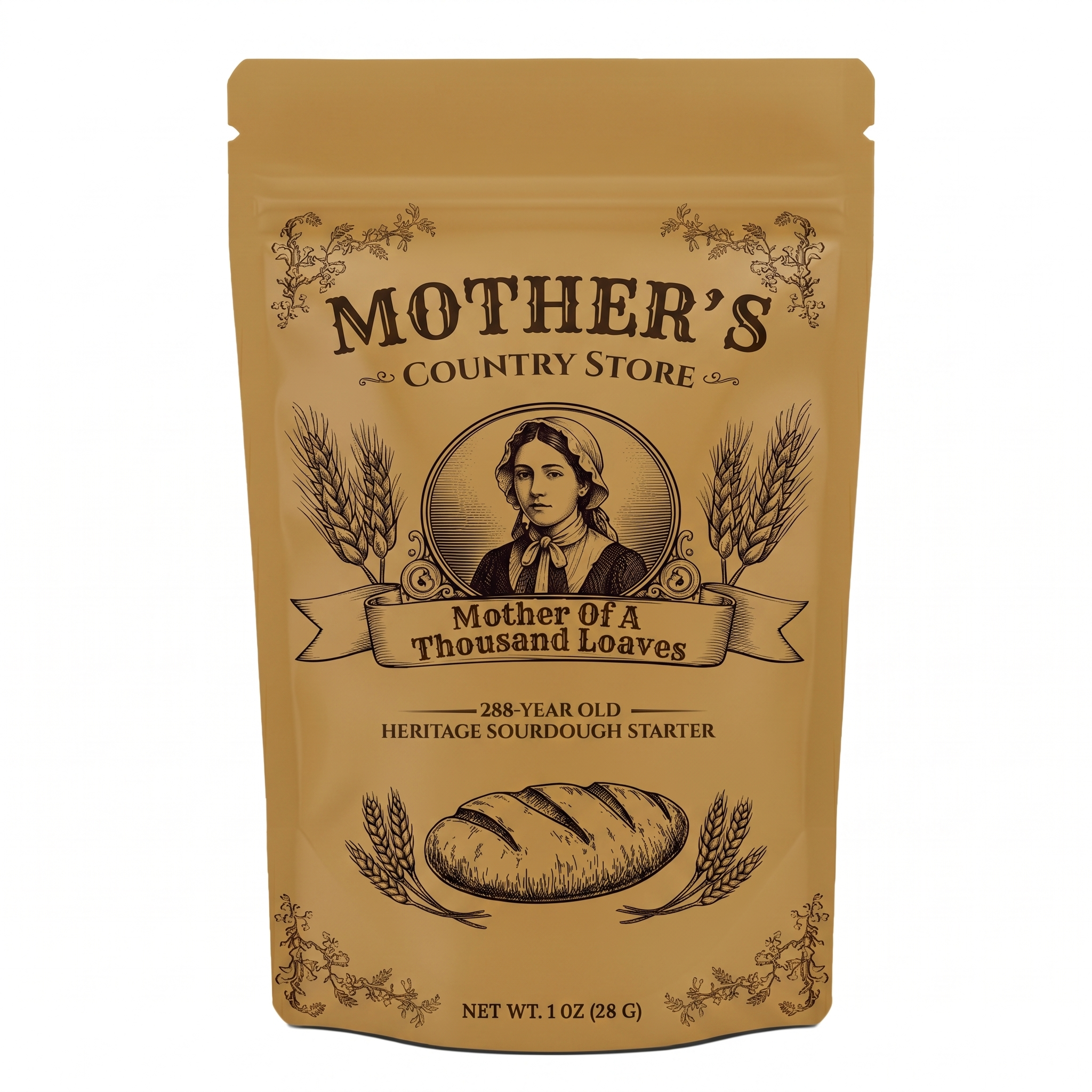
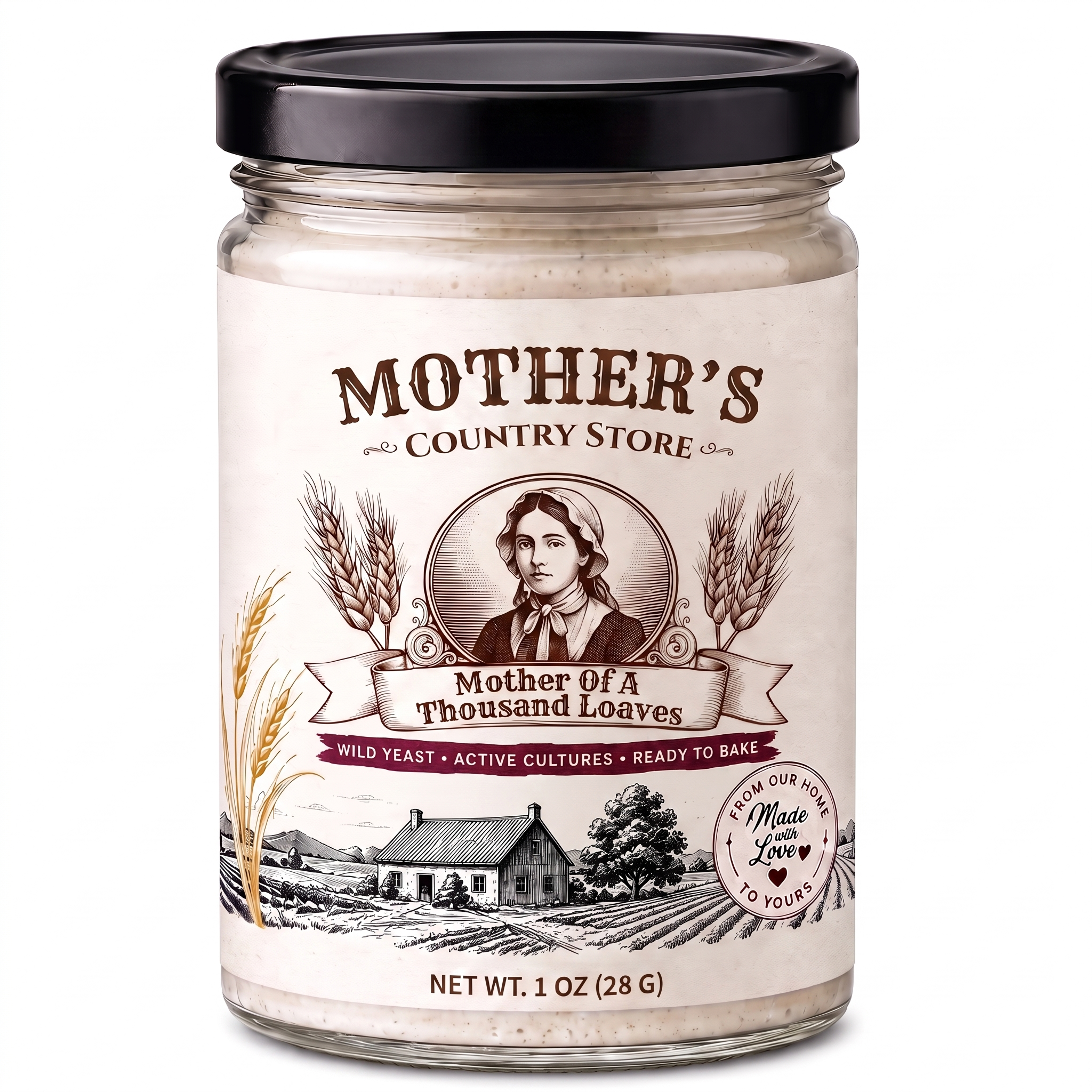
In Saint-Vith, Belgium, there is a library where the books are sourdough.
Each jar on the shelves came from somewhere: a bakery, a farmhouse, a family. Each has a keeper’s name and a story attached. Together they hold more of the world’s bread cultures in one room than anywhere else.
Mother of a Thousand Loaves was made in that spirit. It’s a balanced blend, built to hold many voices at once, so that one jar in your kitchen can taste a little more of the world.
Most starters lock you into one house flavor. This one is built for curiosity. Feed it 1:2:2 and keep it warm, around 80 °F, and it bakes mild, buttery, almost yogurty. Add a handful of whole grain and proof it cool and long, and it turns bright, with a stone-fruit tang. Put rye or spelt in the levain and the loaf comes out toasty and nutty. Same jar. Different bread.
Under all that range sits a balanced yeast-and-bacteria profile that lifts reliably no matter which path you take. That’s what makes it a good first serious starter: it forgives, and it teaches.
Keep a note of what you fed it and how warm the room was. In a month you’ll have a flavor map of your own kitchen, and a loaf for every mood in it. Bake the world from your oven. Next week, bake it differently.
One starter. A thousand stories.
At a glance
- Origin: Saint-Vith, Belgium (inspiration)
- Since: Blend; no single date
- Flavor: Ranges from lactic and yogurty to stone-fruit tang or toasty grain, by feed
- Activity: Balanced yeast and bacteria; reliable lift
- Feeding rhythm: 1:2:2 at 79 to 82 °F for mild; cooler and longer for tang
- Recommended flour: Bread flour plus rye, spelt or emmer to explore
- Ideal baker: Curious bakers who want one culture and many breads
- Formats: Dehydrated, Liquid
- Recipes in the packet: Country loaf, pan loaf, bâtard, enriched braid
From dry flakes to an active starter
- Arrival. Open the packet into a clean jar. Add about a quarter cup of warm water and a third of a cup of bread or all-purpose flour. Stir. Loose lid.
- First feeding. Twelve hours later, feed it again: same water, same flour. Leave it overnight somewhere between 70 and 80 °F.
- Visible activity. By the second morning you’ll see bubbles and smell something yeasty and a little tangy. Discard down to a quarter cup and feed.
- Ready to bake. It doubles within a few hours of a feed and a spoonful floats in water. Most starters get here in 48 to 72 hours. Cold kitchens take the long end.
Feeding and care
Feeding ratio
Equal weights: 50 g starter, 50 g water, 50 g flour. In cups, about a quarter, a quarter and a third. Discard down to the starter amount first, then feed.
Flour choice
Bread flour is the base. Then play. Ten to thirty percent whole grain and a cool proof gives a brighter tang. Rye or spelt in the levain gives toasty, nutty notes. The activation guide in the packet has the flour map.
Temperature
Aim for 70 to 80 °F (21 to 27 °C). Warmer speeds it up and sharpens the tang. Colder slows it down. Water should feel like a warm bath, never hot.
Storage
Baking most days? Keep it on the counter and feed every 24 hours. Baking on weekends? Feed it, let it get puffy for three to six hours, then refrigerate and feed once a week.
Travel or vacation
A fed starter holds in the fridge for a week without attention, two if it must. For longer, spread a thin layer on parchment, let it dry, and store the flakes sealed. You’ll revive it exactly as you did the first time.
Signs of activity
Doubling after a feed. Bubbles large and small. A smell that’s yeasty, mildly sour, maybe a little fruity. Light and airy when you stir it. Liquid on top means it’s hungry, and that’s all.
Troubleshooting
Flat after 24 hours: move it somewhere warmer and use filtered water. Smells like nail polish or vinegar: it’s hungry, feed it. Too thick or runny: adjust with a spoon of water or flour. Fuzzy mold or pink or orange streaks: throw it out, wash the jar, and email us for a replacement.
Ingredients and allergens
Contains wheat; may contain rye and spelt depending on what you feed it.
Questions bakers ask
Dehydrated or Liquid?
Dehydrated keeps for months and wakes in two to three days. Liquid arrives active and bakes sooner. First starter or a gift? Choose Dehydrated.
How is it shipped?
USPS from Texas, within one to two business days of your order. Most packets arrive in five to seven business days. US addresses only.
How do I store it before I open it?
Sealed, cool and dry. A pantry shelf is fine. In a humid climate, put the packet inside an airtight container.
How long until it’s active?
Most starters are active in 48 to 72 hours. Warm kitchens finish sooner, cold ones take the full three days.
Do I need special flour?
No. Bread flour or all-purpose works for waking any of the seven. Each starter has a flour it loves for baking, listed above.
Can I give it as a gift?
Yes. Dehydrated keeps for months, so it can wait for the right day. The Welcome Guide ships with it, so the recipient has everything.
What’s in it?
Flour, water and the wild yeast and bacteria of the culture. Nothing else. Allergen details are listed under Feeding and care.
What if it doesn’t wake up?
Follow the guide and it’s still flat? Email support@motherscountrystore.com within 7 days of delivery with your order number and a photo, and we make it right with a replacement or a refund.
Reviews
There are no reviews yet.